Serge Écary
- Serge Albert Écary
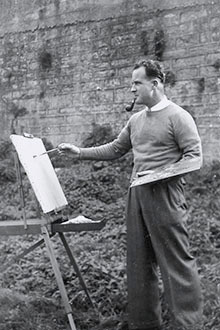
Serge peignant -
8 septembre 1918, Saint-Laurent-des-Eaux, Loir-et-Cher
- 21 décembre 1943, Paris 9e
- Nicole, Catherine, Marie-Françoise, Brigitte, Cécile, Gilles
- 6 décembre 2007 (89 ans),
Lyon 6e - Surnom: Papé
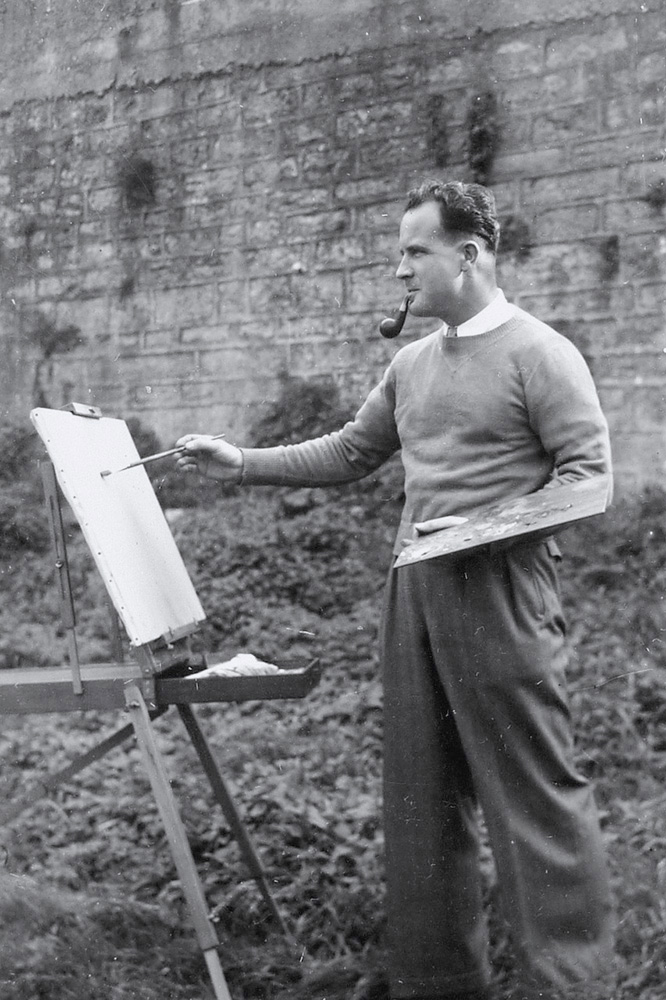
Serge Écary, né le 8 septembre 1918 à Saint-Laurent-des-Eaux dans le Loir-et-Cher, et décédé le 6 décembre 2007 à Lyon à l'âge de 89 ans, est le fils de Albert Écary et Marie-Véronique Sabatier.
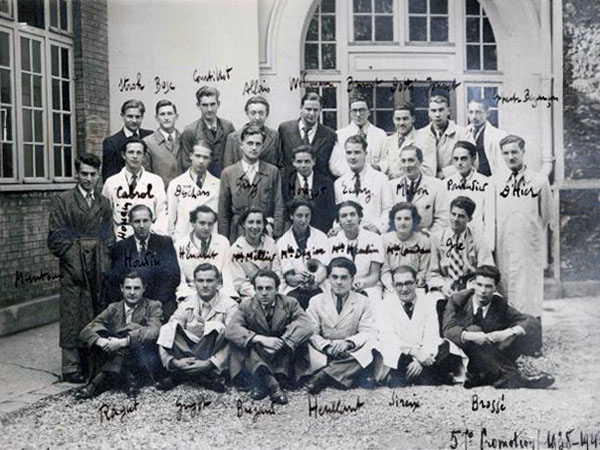
En 1938 il entre à l'École supérieure de physique et de chimie industrielles de Paris, promotion 57, alors dirigée par Paul Langevin. Il y rencontre Nelly Saulé, deux promotions en-dessous.
Serge et Nelly se marient en 1943. Ils ont six enfants, les trois premiers nés en France:
- Nicole (1944, 82 ans)
- Catherine (1947, 79 ans)
- Marie-Françoise (1949, 77 ans), dite Truquette
Les trois derniers nés au Brésil:
- Brigitte (1958, 68 ans), dite Bibi
- Cécile (1960, 66 ans)
- Gilles (1963, 63 ans), dit Gillou
Chronologie
- 1918: naissance de Serge (8 septembre).
- 1921: naissance de Nelly (7 novembre).
- 1942: rencontre de Serge et Nelly à Physique et Chimie de Paris.
- 1943: mariage à la mairie (21 décembre), à l'église (23 décembre), à Paris.
- 1944: naissance de Nicole (20 septembre).
- 1947: installation à Échirolles; naissance de Catherine à Paris (28 juin).
- 1949: Installation à Vaux-en-Velin (Chemin de la Poudrette, cité T.A.S.E.); naissance de Truquette à Paris (30 janvier).
- 1954: arrivée au Brésil, à Saint-André (septembre).
- 1955: déménagement (1015 avenida Dom Pedro II).
- 1958: naissance de Bibi (4 mars).
- 1960: naissance de Cécile (3 juillet).
- 1963: naissance de Gillou (25 février).
- 1964: départ du Brésil, retour à Lyon (19 rue Malsherbes).
- 1965: emménagement au 2 rue Duquesne.
- 1967: installation à Milan (43 via Boccacio), Papé, Mamée et les trois petits.
- 1971: retour à Lyon.
- 1972: achat de la maison de Crémieux.
- 1981: vente de la maison de Crémieux, achat de celle de Fourvière.
Citations
Une épouse, on peut en changer ; des enfants, on peut en refaire ; mais une maman, c'est irremplaçable.
Prononcée devant son épouse peu après le décès de sa maman le 7 novembre 1948, qui l'avait plongé dans un chagrin intense. Rapportée par Nicole, de la bouche de Mamée.
Transcriptions
Liste officielle de prisonniers français
Extrait de la liste officielle n°62 de prisonniers français (page 23/66):
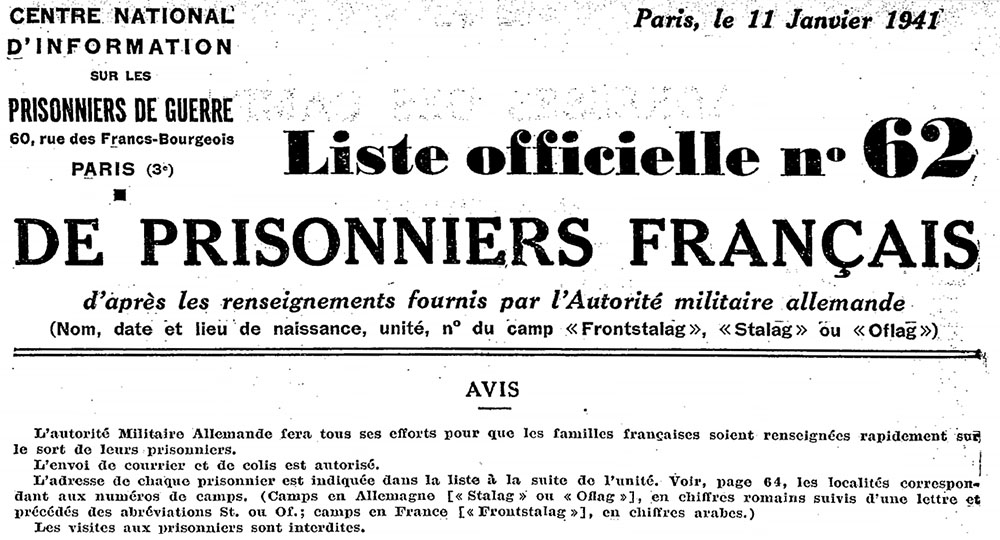
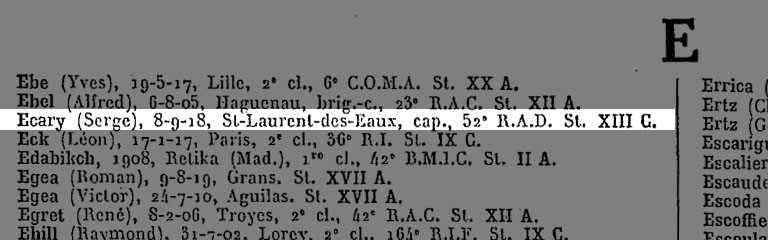
Centre National d'Information sur les Prisonniers de Guerre, 60, rue des Francs-Bourgeois, Paris 3e
Paris, le 11 janvier 1941
Liste officielle n°62 de prisonniers français
d'après les renseignements fournis par l'Autorité militaire allemande[...]
Nom: Ecary (Serge)
date et lieu de naissance: 8-9-18, St-Laurent-des-Eaux
unité:cap., 52° R.A.D.
n° du camp: St. XIII C.
Note: Le Stalag XIII-C (Stammlager) est un camp de prisonniers de guerre de l'armée allemande situé sur la commune de Hammelburg, dans le nord de la Bavière.
Sources
- Les ingénieurs de la 57e promotion de l'ESPCI
- Thèse: Phénylindanedione, Serge Écary (1948, éd. Masson)
- Interview par Marianne (en anglais)
Two months before the end of the First World War, a hardware shopkeeper's family grew to three, welcoming a little boy, Serge ECARY , in its poor house of Montrouge, in the South of Paris. He followed his education in the school of Chaptal High School until the Advanced Level. He then passed a competitive exam in physics and chemistry .He came 2nd in the class at the end of the first year.
But at the end of this first year of school, in 1939, all the bulletin walls of the school's hallways were covered with posters calling for the
General Mobilization
. Being a student of a famous school, he was sent to Fontainebleau, to the E.O.R. School (Eleves Officiers en Reserve) for three months. He had to endure a harsh military life style, which he did not enjoy at all. The front-line trenches were not an enjoyable place for anyone. As he complained, he was sent in the 2nd class, asCorporal
, in a battery of 47 anti-tanks, whereas he could easily have beenOfficer
right away. His regiment was sent to Alsace. There, in his free time, he played piano for his comrades.During the occupation, he was sent to Strasbourg: he had to walk without stopping from Celesta up to this eastern French town. Despite the numerous opportunities, nobody tried to escape because they were told that in Strasbourg they would be demobilised and sent back home. But, arriving there, they were caught and sent to Germany, still by foot. They stayed a while in a temporary prisoner's camp. The weather was horrible, mostly rain, and as no tents were provided to them, they had to attach clothes together over their heads. Later, they took the train for Nuremberg, (Hommes 40 Chevaux 8 - the train cars could equally accommodate men or beasts), where they had to work each day in the local peasants' houses, cultivating their enemies' land. During his free time, having no piano at his disposal, Serge painted portraits of his comrades and of the people who surrounded him. Time seemed horribly long and the work was difficult and tiresome. He did not want to continue this tiring life with no defined ending; he decided to pretend to be sick, with a strong pain in the heart.
He was required to rest in the camp for nearly four months, where he continued his portraits. He painted, among many others, the portrait of a German military doctor who had examined him. The doctor was very pleased and he put Serge's name on the list of ill prisoners who could not bring any help to the camp and were sent back home. So Serge was then sent to Bergerac in France and demobilised.
What happiness you can feel when you find your parents again, who had no news from you for nine months: I will never forget this intense joy and comfort I felt at this moment; I nearly wanted to cry.
Reinstated in his Engineering School after a two year-break (one year of military life, the other being a prisoner) he continued with two years of hard studies, and finally passed his exam with a diploma with honours. He then continued his studies with four years of research in the College de France, to obtain his chemistry thesis. He married a wonderful student who was also at this school, and had six children. He took a job in a synthetic textile enterprise and was sent successively to Grenoble, to Lyon, to Brazil and to Italy, each time being promoted.
Since his retirement at 64, he devoted his free time to his hobbies: painting, tinkering, and gardening.